The Process of Eviction in Virginia: Beginning with the Notice


What to Do When You Receive an Eviction Notice in Virginia
Eviction could be the legal procedure for removing a tenant from the rental property. In Virginia, eviction is not a simple or easy process. It needs carrying out a specific group of procedures, and eviction notices are an important part with this process. Landlords in Virginia must provide written notice to tenants before starting an eviction case in court. In this post, we shall explain the basic principles of eviction process in virginia to greatly help landlords understand their legal rights and responsibilities.
What is a Virginia eviction notice?
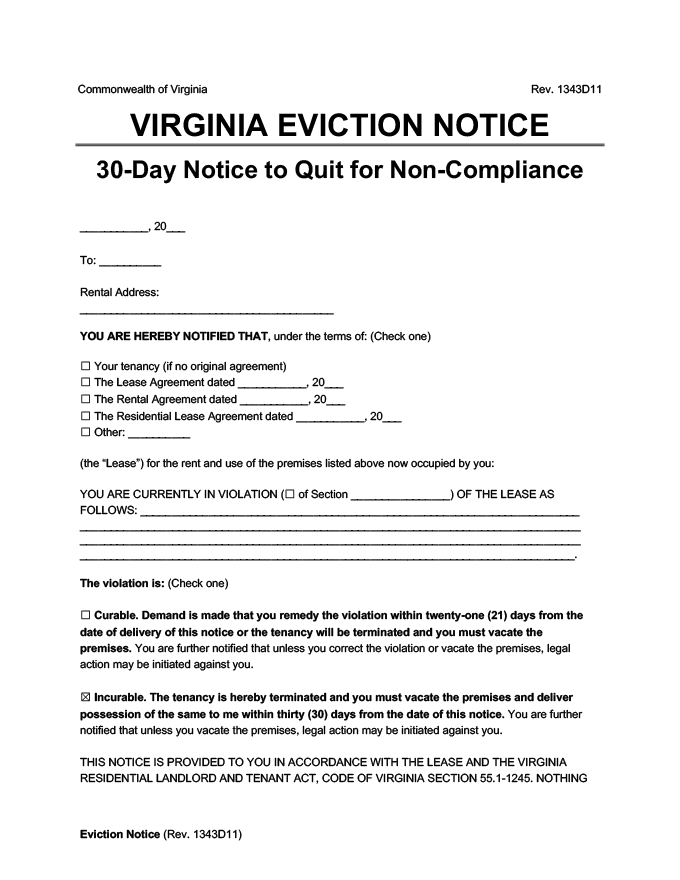
A Virginia eviction notice is a published document provided to tenants by landlords to see them of the to vacate the property or cure the difficulties ultimately causing the eviction within a specified time period. Virginia law requires landlords to follow along with specific guidelines while giving eviction notices. The sort of eviction notice required depends upon the cause of eviction.
Forms of eviction notices in Virginia
You will find three primary forms of eviction notices in Virginia, including:
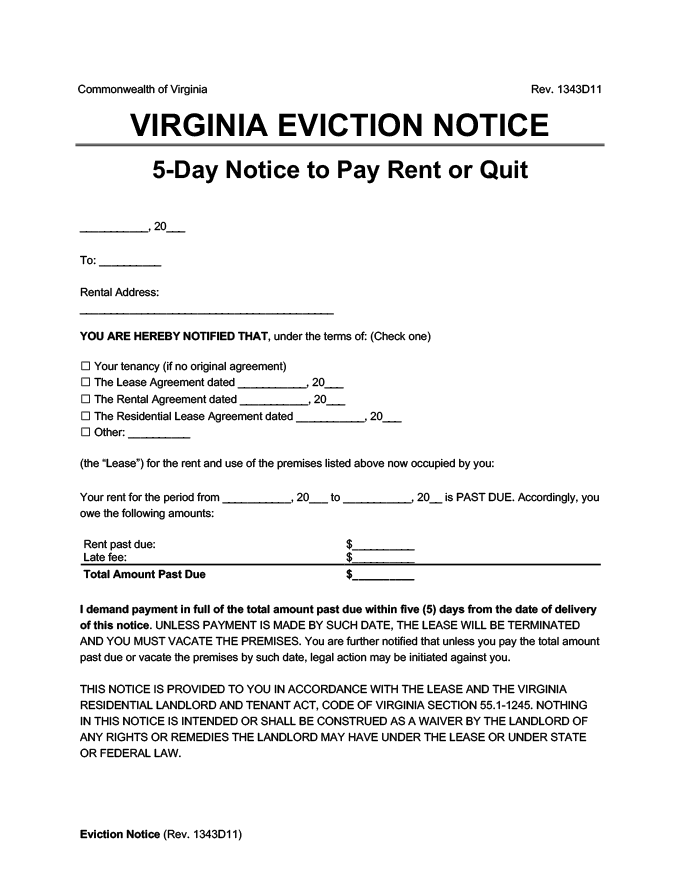
Pay Rent or Quit Notice: This notice is given to tenants who have failed to pay for rent, asking them to pay for rent or vacate the property within 5 days.
Cure or Quit Notice: This notice is given to tenants who've violated other lease obligations, such as causing property damage, disturbing neighbors, or carrying out illegal activities. The notice gives tenants 21 days to correct the issue or vacate the property.
Unconditional Quit Notice: This notice is given to tenants whose eviction isn't based on the violation of the lease agreement but alternatively other reasons, like a landlord's desire to terminate the tenancy without any reason. This notice only gives tenants 30 days to vacate the property.
How exactly to serve a Virginia eviction notice
To legally evict tenants under Virginia law, landlords must serve an eviction notice to tenants in-person or through certified mail. After service, landlords must file an eviction lawsuit in court if the tenants refuse to vacate the rental property within the specified time period. In Virginia, eviction lawsuits usually takes up to 3 weeks from enough time they are filed to the time they are completed.
Consequences of poorly served eviction notices
It is essential for landlords to follow all the legal guidelines for serving eviction notices. Failure to serve eviction notices correctly can result in the case being dismissed, that may make it burdensome for landlords to evict tenants. Furthermore, tenants who feel like they've been unlawfully evicted can file a civil lawsuit contrary to the landlord.
Resources available for Virginia landlords
Virginia landlords who need assistance with evictions can touch base to the Virginia Department of Housing and Community Development and the Virginia Housing Development Authority. These agencies provide various resources to help landlords in understanding the legal process of eviction, including forms, brochures and handbooks.
Conclusion:
Understanding the basics of Virginia eviction notice is needed for landlords to legally evict tenants and avoid any legal implications. Landlords must follow Virginia's eviction laws, serve eviction notices correctly, and take proper legal action to get rid of tenants from their rental properties. By following the correct procedures, both landlords and tenants can protect their rights and interests.